
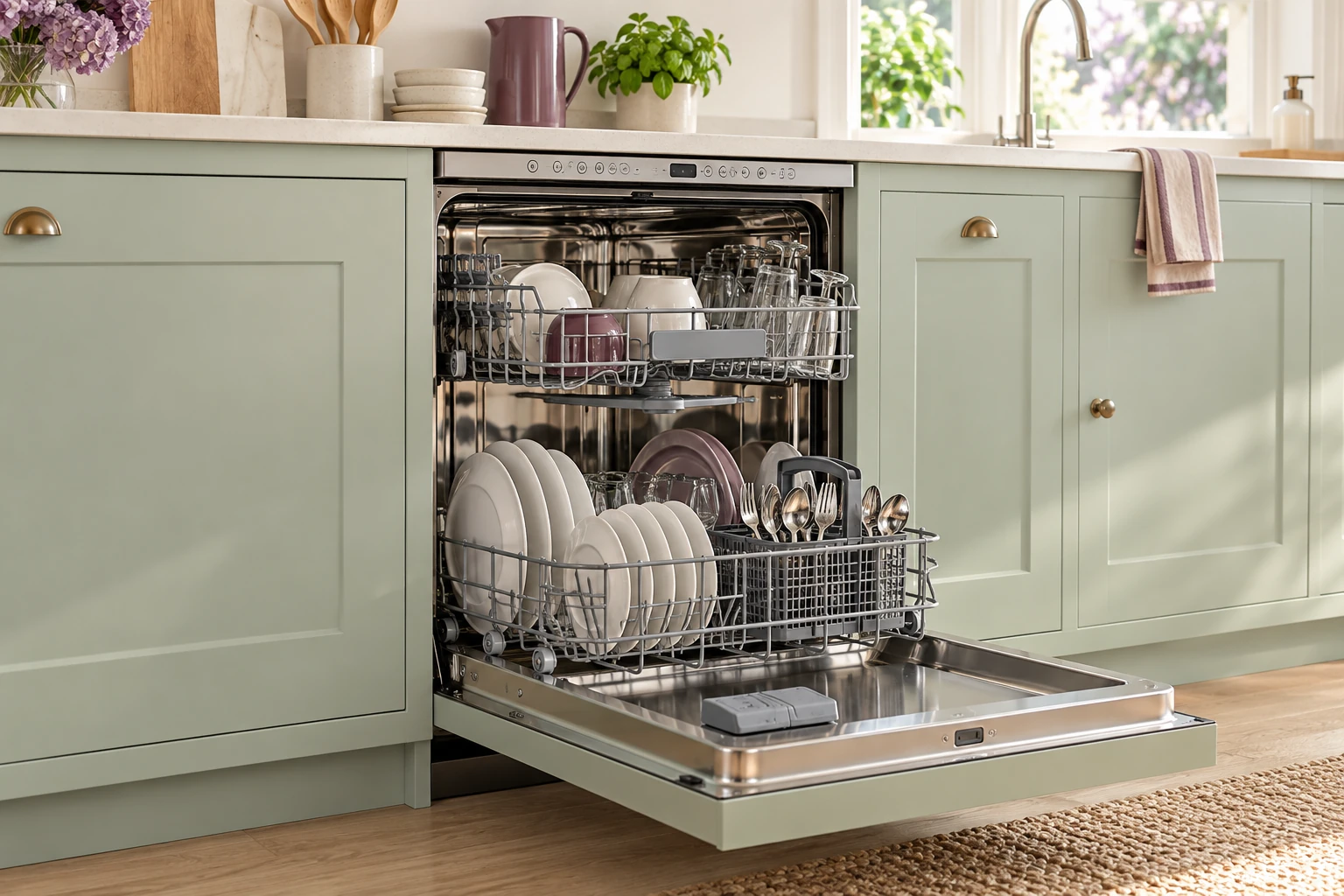
AEG Dishwasher · your observations
Follow the water and the programme to its last stage.
A dishwasher that never takes in water is different from one that washes then leaves water behind. Keep the last message, whether the programme declared completion and the condition of the dishes in one short account.
Completion changes the question
Standing water after an interrupted programme has different context from water after a declared finish. Keep that distinction with the exact warning and a description of whether the product is integrated or freestanding.
Water is still visible when you open the door
Say whether the programme completed or was interrupted. Retain the final warning and existing fitted arrangement. Drainage or water-level questions can be relevant without proving a faulty pump.
A different sound starts during use
Describe the sound and its timing: at selection, during movement or at the end. Stop use for smoke, burning or uncontrolled movement instead of running another demonstration.
When a part has been suggested online
Retain the exact product and observation for the team to assess. A generic article or a code from another family is not confirmation of a part order or stock availability.
When the sequence is hard to remember
Start with the last ordinary use you can describe reliably. Keep uncertain details identified as uncertain rather than filling them in with a likely-sounding explanation.
Reading the AEG label
Keep the model and product number/PNC where shown on existing paperwork or a safely visible label. Keep the full installed AEG designation, the actual product type and the existing control arrangement. This name identifies an enquiry route; it does not establish current manufacture, parts stock, replacement compatibility or acceptance of every product.
Discuss the proposed work
Call 0800 037 4915 with the model and sequence of events. Suitable work, charges and a Monday–Thursday appointment are checked for the individual request.