
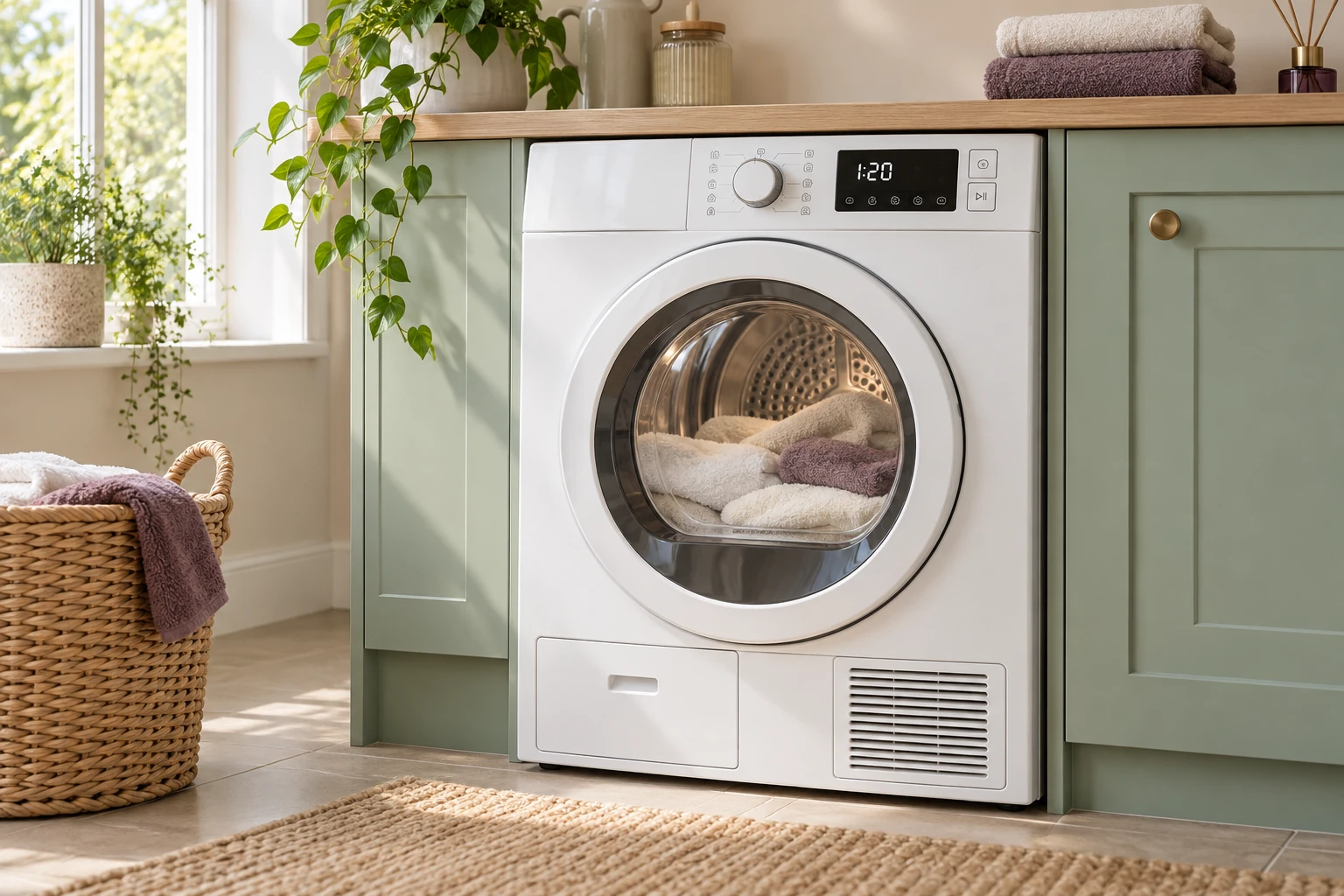
Siemens Tumble dryer · your observations
Did the programme finish, or just stop?
Identify the dryer format and describe the laundry at the end. A timed programme, a sensor programme and a drum that does not turn are different starting points. Note whether the clothes were warm, cold or still damp.
The drying format belongs in the model account
Vented, condenser and heat-pump dryers handle moisture differently. State the actual format rather than guessing from appearance. Ordinary sensing or drive enquiries must not be confused with excluded heat-pump sealed-system work.
The result changes between ordinary uses
Keep settings and results from the occasions you already observed. A normal programme between problems adds context, but cannot identify the cause or establish that the difficulty has gone.
It ends before the expected result
Say what you selected and the last ordinary stage you noticed. Include any completion signal or warning. Do not repeat an unsafe programme merely to obtain a more detailed account.
When ordinary results vary
A brief note of settings and outcomes already observed can make variation easier to explain. One good result does not settle a recurring enquiry.
When entry needs another person
Keep the person authorising work and the person providing access clear. A locality name alone cannot establish permission, fitted access or the proposed visit arrangement.
Reading the Siemens label
Keep the full E-Nr including its ending and the FD where present on the safely visible label. Keep the full installed Siemens designation, the actual product type and the existing control arrangement. This name identifies an enquiry route; it does not establish current manufacture, parts stock, replacement compatibility or acceptance of every product.
Discuss the proposed work
Call 0800 037 4915 with the model and sequence of events. Suitable work, charges and a Monday–Thursday appointment are checked for the individual request.